Services / Academic CV review
Academic CV review for PhD applications and research posts
An academic CV is not a business CV with publications bolted on. It is read in ninety seconds by someone deciding whether to interview you, and the conventions are unwritten. We mark it up line by line against what selection panels actually look for.
- Line-by-line written feedback
- Restructured section order
- A rewritten opening profile
- One free revision after your edit
An academic CV review is structured feedback on a CV used for PhD applications, postdoctoral posts or fellowships. It covers section order, the research profile, publication formatting, evidence of independence, and precision of wording — judged against what academic selection panels look for.
What is included
What you get with academic cv review
Structure and order
What belongs at the top for the post you are applying for — which differs between a PhD application, a postdoc and a lectureship.
Research profile
A short opening statement that says what you work on, rather than the generic paragraph most CVs waste their first inch on.
Publications and outputs
Formatted to convention, ordered correctly, with in-progress work presented honestly rather than padded.
Evidence of independence
Funding, teaching, supervision, review work and collaborations — the things panels read as signals of a future colleague.
Wording and precision
Vague claims replaced with specifics. 'Assisted with research' becomes what you actually did.
One revision included
Send it back after you have made the edits and we will check the new version at no extra cost.
Who it is for
Two kinds of client, one standard of work
- A first academic CV with no template to follow
- A CV built for industry that needs converting
- Uncertainty about what counts as relevant experience
- Applying across several institutions with different norms
- Moving from postdoc to a permanent post
- A CV that has grown by accretion for years
- Fellowship applications with strict CV formats
- Presenting a career break or non-linear path well
The problem
What an academic CV has to do in ninety seconds
A selection panel reads a great many CVs in one sitting. Yours is scanned before it is read, and the scan is looking for a small number of specific signals. An academic CV that is merely tidy will not survive that; one built around the signals will.
What you work on
A panel should know your research area from the first inch of the page, not deduce it from a publication list on page two.
Output, formatted to convention
Publications ordered correctly, with in-progress work presented honestly rather than padded to look longer.
Evidence of independence
Funding, teaching, supervision, review work and collaborations — read as signals that you will function as a colleague rather than a student.
Fit for this post
A postdoc CV and a lectureship CV emphasise different things. The same document rarely serves both well.
Structure and order
What belongs at the top changes with the post. Panels are used to a convention, and departing from it costs attention.
Precision
“Assisted with research” tells a panel nothing. What you actually did, with what method, on what scale, tells them everything.
Structure
Section order changes with the post
| Applying for | What belongs near the top | What moves down |
|---|---|---|
| PhD place | Research interests, relevant methods training, dissertation or project work, any research assistance | Unrelated employment, school-level detail |
| Postdoctoral post | Publications, the doctorate, methods and technical skills, conference output | Teaching, unless the post is teaching-heavy |
| Lectureship | Publications, teaching experience, funding, supervision | Undergraduate detail, non-academic employment |
| Fellowship | The proposed programme, track record of independent output, funding history | Anything not evidencing independence |
We restructure to whichever of these you are applying for, and say why. If you are applying across categories, the honest answer is usually two versions rather than one compromise.
Common findings
What we change most often
| What we find | Why it costs you |
|---|---|
| A generic personal profile | The most valuable inch on the page spent saying nothing specific |
| Publications in inconsistent formats | Reads as carelessness in a profession where citation accuracy is the job |
| “In preparation” used loosely | Panels discount it, and over-claiming damages the entries that are real |
| Teaching listed without scale or level | “Taught undergraduates” versus “designed and delivered a 40-student second-year module” |
| No funding section, even when there is funding | Small grants and travel awards evidence independence and are routinely omitted |
| A career break left unexplained | A short factual line closes a question the panel will otherwise answer for themselves |
| Four pages where two would do | Panels do not read the fourth page |
Practicalities
Turnaround, revisions and what else we can look at
We restructure, mark up and rewrite the opening profile as a worked example. The rest stays in your voice — because a CV that does not sound like the person at interview is a problem you will meet in the room.
How it works
Three steps, entirely in writing
Send what you have
Attach the data, or just describe the project. No account, no mandatory call, and a five-field form rather than a fifteen-field one.
Approve a fixed quote
Usually within one working day, naming the statistician assigned, the deliverables and the deadline.
Receive the work
Output, syntax and a plain-English explanation — with follow-up questions answered at no extra cost.
Client feedback
What clients say about this work
“My academic CV now looks far more professional. The structure and wording were improved considerably.”
“Excellent CV review service. They highlighted my research experience effectively and tailored it for academic applications.”
Your statistician
Who does this work
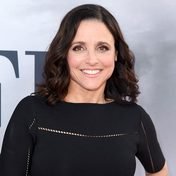
Member of the Royal Statistical Society
Psychometrics, structural equation modelling and research methodology, with doctoral supervision and journal review experience.
This page was reviewed for statistical accuracy by Elaine Halliburton on 14 August 2026.
Common questions
Answers before you ask
Who reviews it?
An experienced academic who has sat on selection panels — not a general CV service. Academic hiring conventions are specific and largely unwritten.
Will you rewrite it for me?
We mark it up, restructure it, and rewrite the opening profile as an example. The rest of the editing is yours, which keeps it in your voice — and panels notice when a CV does not sound like the person at interview.
Can you review a cover letter too?
Yes, quoted alongside. It is usually worth doing together since the two documents should not repeat each other.
What about interview preparation?
We also cover PhD interview preparation and the questions panels most often ask. Mention it when you get in touch.
How long does it take?
Three working days as standard. Tell us if your deadline is sooner and we will say honestly whether we can meet it.
Related
Often needed alongside this
Dissertation statistics help
Analysis of the data you collected, explained test by test so you can defend it.
From £95Statistical consultancy
Design, analysis and reporting for charities, universities, the NHS and business.
From £950Results chapter review
A statistician checks the chapter you wrote before it is submitted.
Fixed quoteSend the data. Get a fixed quote.
Attach your dataset or just describe the project. A named statistician replies with a price and a deadline, usually within one working day.